WILD Reflections
‘Get your headphones, have some breakfast, have some chats! [*smoke grenade*] Gather round the fire, tune to Channel 5: Welcome. Be useful, be patient, be kind.’
And we’re off.
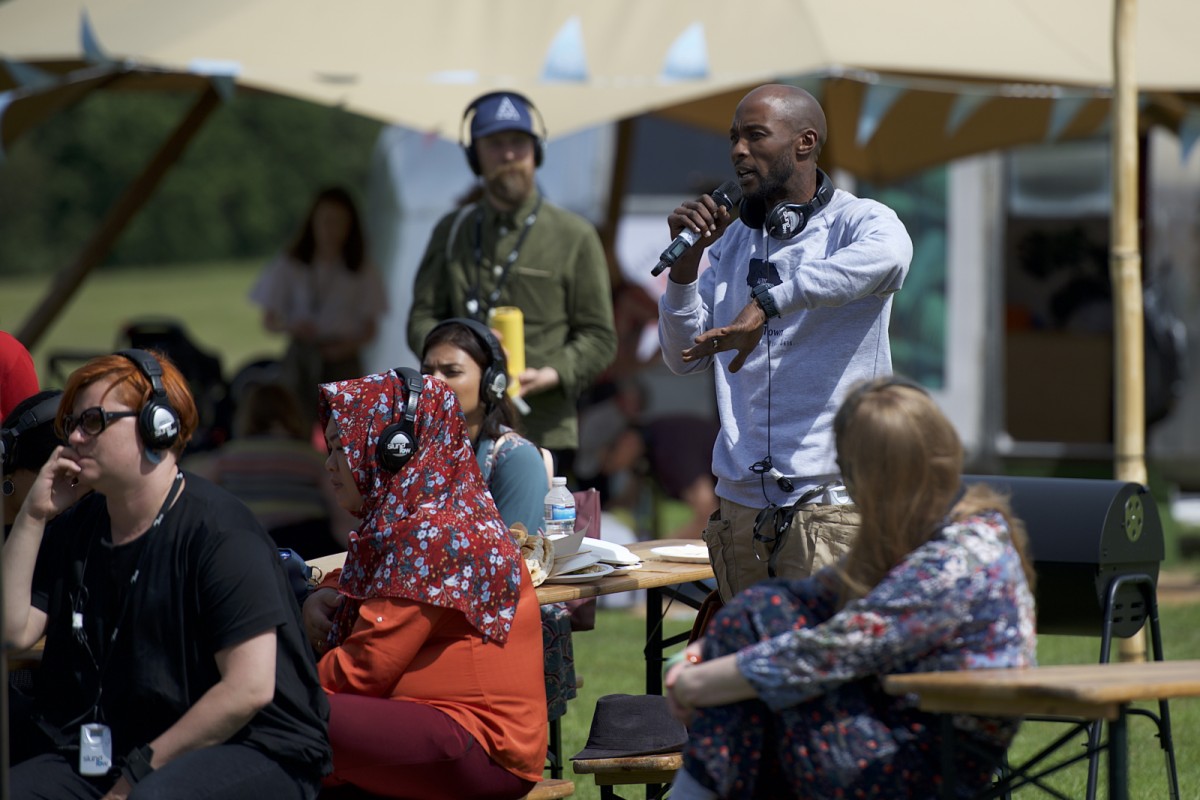
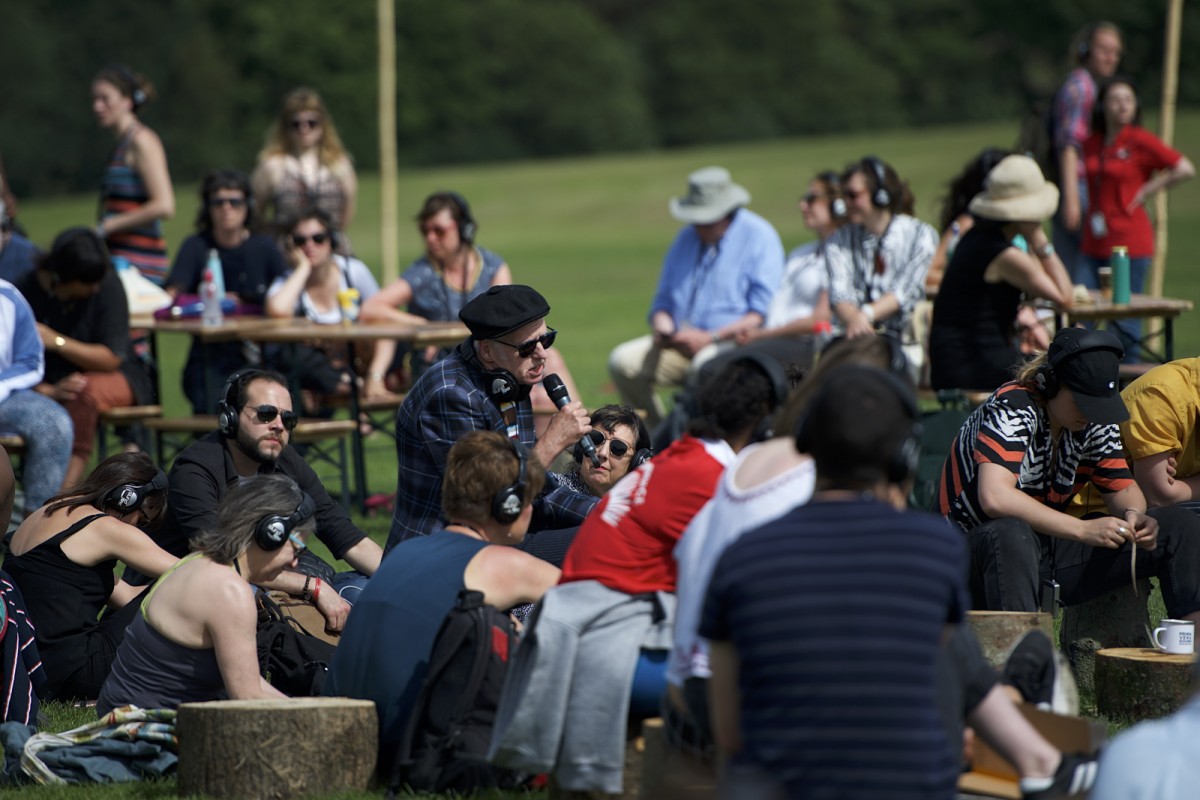
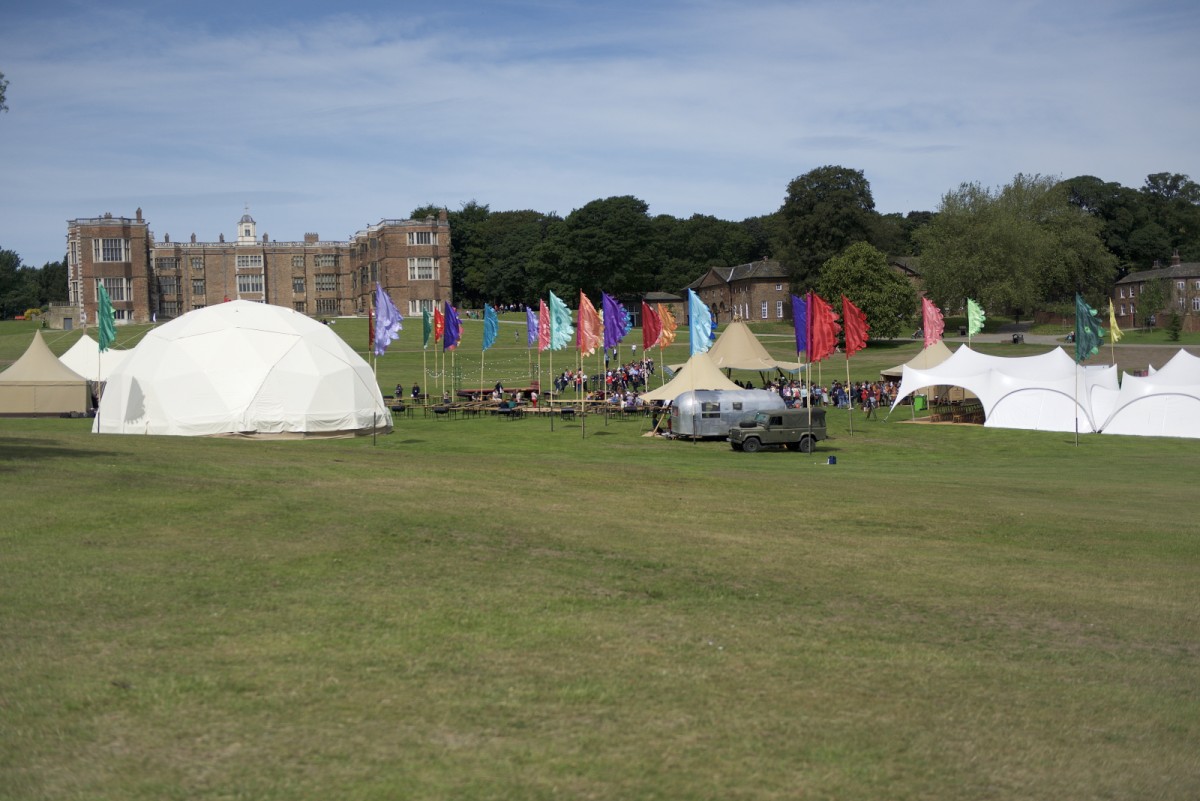
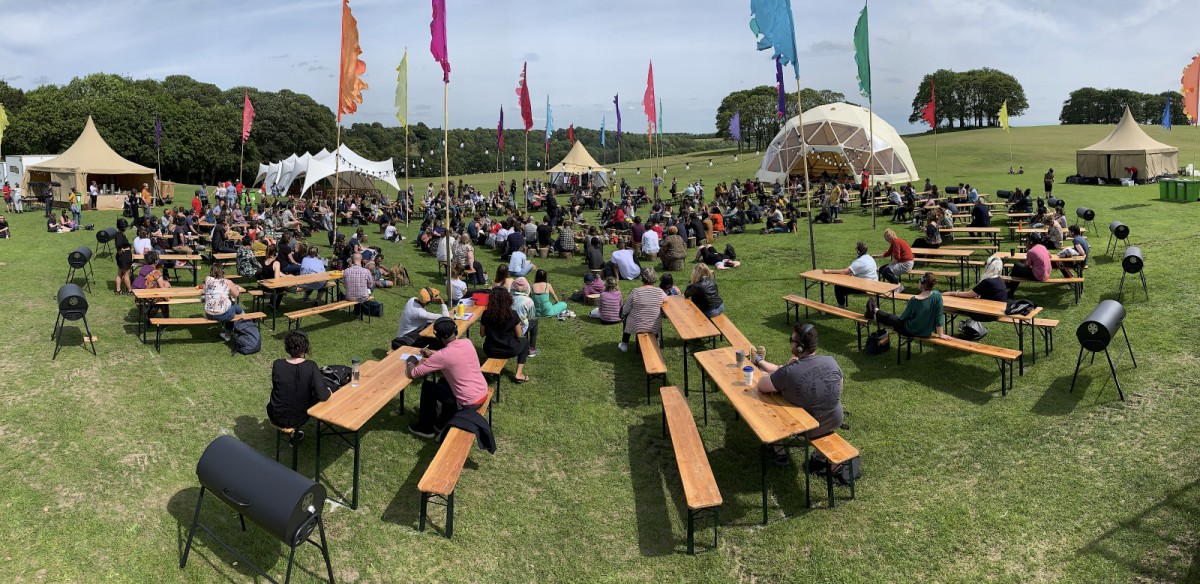
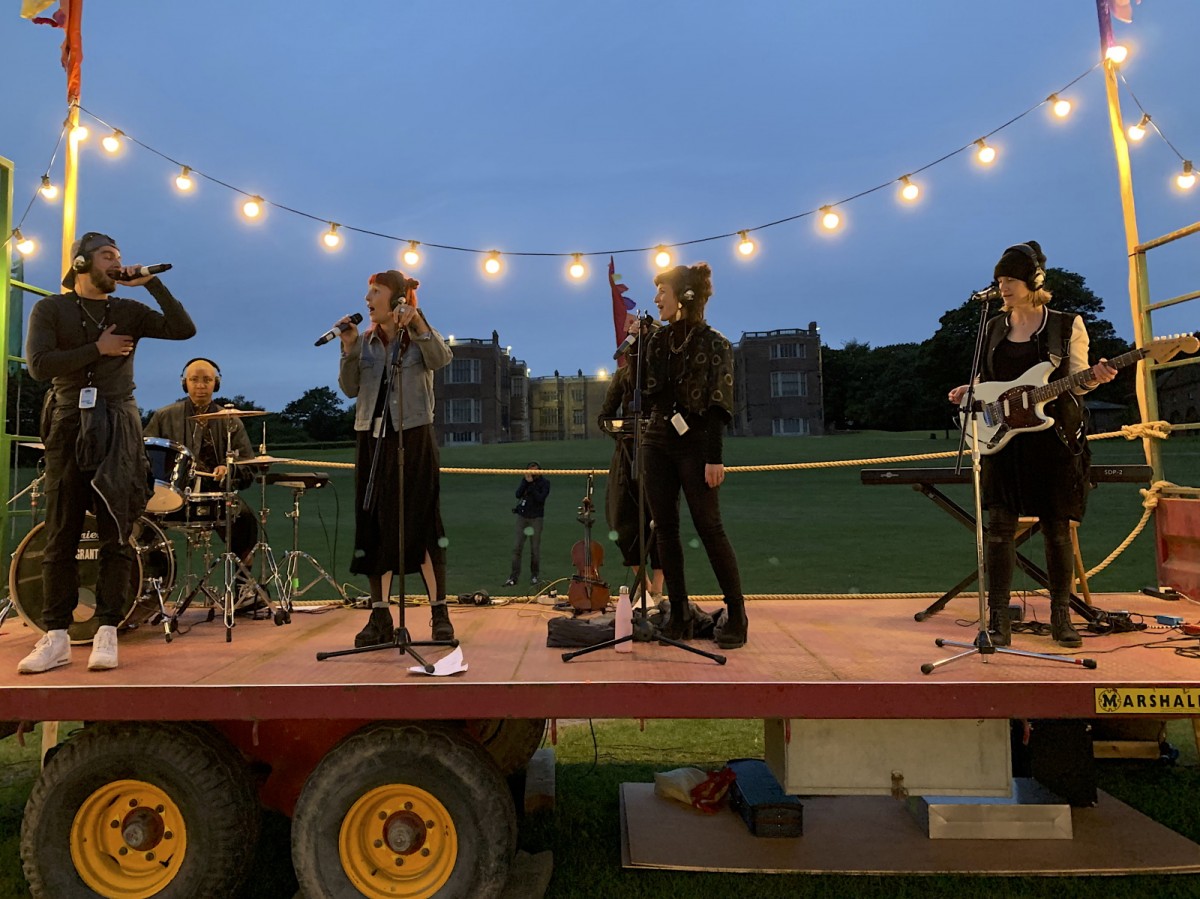
Camp WILD sits in a pleasant dip of the meadow just below Temple Newsam, on the eastern outskirts of Leeds. The camp is symmetrical and has an outer circle of tents (tents for talks and presentations and service tents (bar, creche, tech), a lorry trailer with a platform for the cabaret) and an inner circle of tree trunks grouped round a campfire at the very centre. It is aesthetically pleasing and exciting, as well as perfectly functional. We start and finish the days around the fire, and it’s here the debates are centred. When we’re not in the inner circle, we flock to the Spiky Tent, the Wedding Tent, the Dome and the Tipi Tent (or change channels and stay where we are if we don’t fancy flocking).
A ‘camp’ evokes adventure and holds memories of camping holidays, outdoor activity centres, playing guitar round the fire at Scouts, and it has military associations, too. Alan’s military background often shines through in Slung Low productions – battles on land and water, pyrotechnics, fire on land and water, smoke grenades, the use of radio channels to be in constant communication with team and cast, talking them through an operation, and it runs through the language he uses. Alan takes leadership very seriously, but his style is not serious; it is brief, informative and hilarious, as well as displaying total and justified trust in his team. The army framework does not obstruct the company’s values (being useful and kind); quite the opposite: it supports them. Slung Low believe in leading by example and after the welcome address, it was clear that everyone at WILD was going to work their hardest to live up to these values. I remember a blog post by Alan about coaching from a few years ago, and here is the motivational skill of a coach.
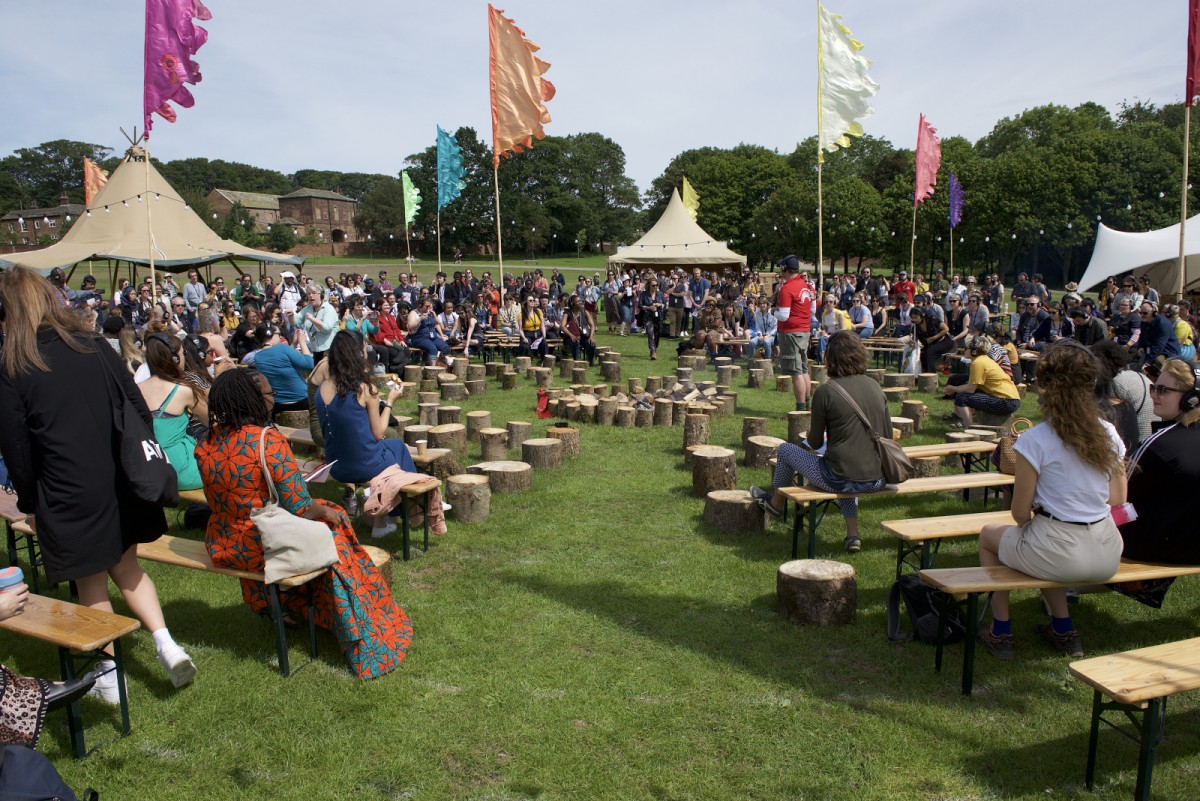
Slung Low set themselves the target of being inclusive of and accessible to everybody, whatever they do: adventures for audiences, college courses, conferences. They have been reactive to delegates’ needs and there are five BSL interpreters, often working 1:1, the site is fully accessible and seeing the audience sign applause for Sparky Caro at the Cabaret (where the interpreter tells us what she is saying) is very uplifting. The conference is not male centric, there are 17 presenters from a BAME background, as well as many international respondents amongst the invited British Council artists. This puts the ideal of everyone feeling represented and valued into practice. It was also encouraging to see that trans artists and specialists could speak in a safe and supportive environment.
A good way to talk about WILD’s innovation is to look at elements which seemingly contradict each other, but which are compatible in this setting:
Freedom & Structure
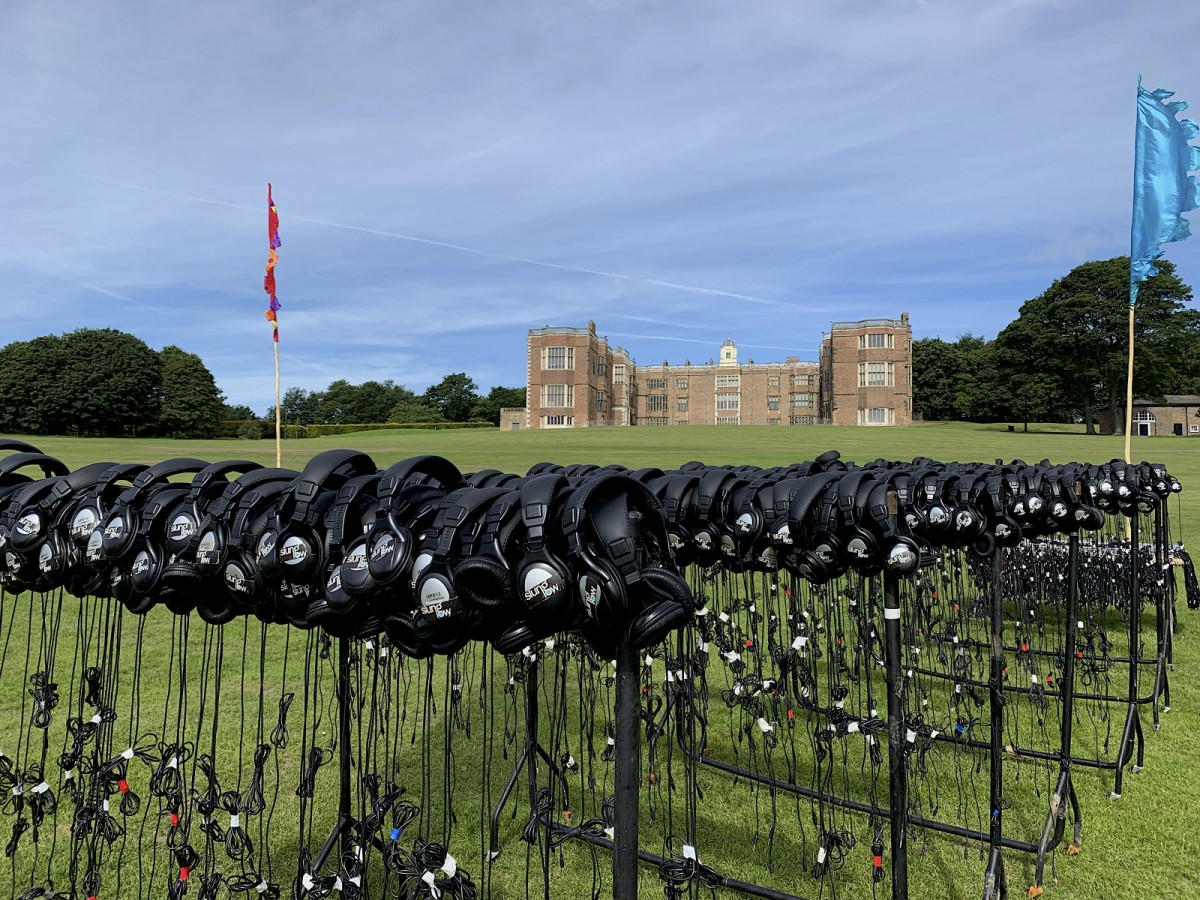
There is a tightly timed schedule of parallel sessions and a debate on both days. The sessions offer the freedom of choice and most delegates try and engage with as many talks and panels as they can. There’s freedom to roam with the headphones: the radius of the broadcasts from the tents is several hundred metres (I tested it!) and I managed to tweet four parallel sessions by sitting in one spot and changing channels. There is also the freedom to decide what you pay and, as with Slung Low ticket sales, people can be trusted not to be in it for a cheap or free ride. Delegates paid in advance and the average, it turns out, is higher than expected, slightly clouded by no-shows or last minute drop outs (the latter for reasons beyond delegates’ control).
Freedom to speak at a conference doesn’t necessarily mean everyone can say what they want to say, when they want to say it – many people feel it’s not their place, that others are more articulate, that they will be taken down, that they will not be listened to – it is to WILD’s credit that silence never really descended after presentations or during the debates, that nobody was cut off and that people didn’t apologise before making contributions.
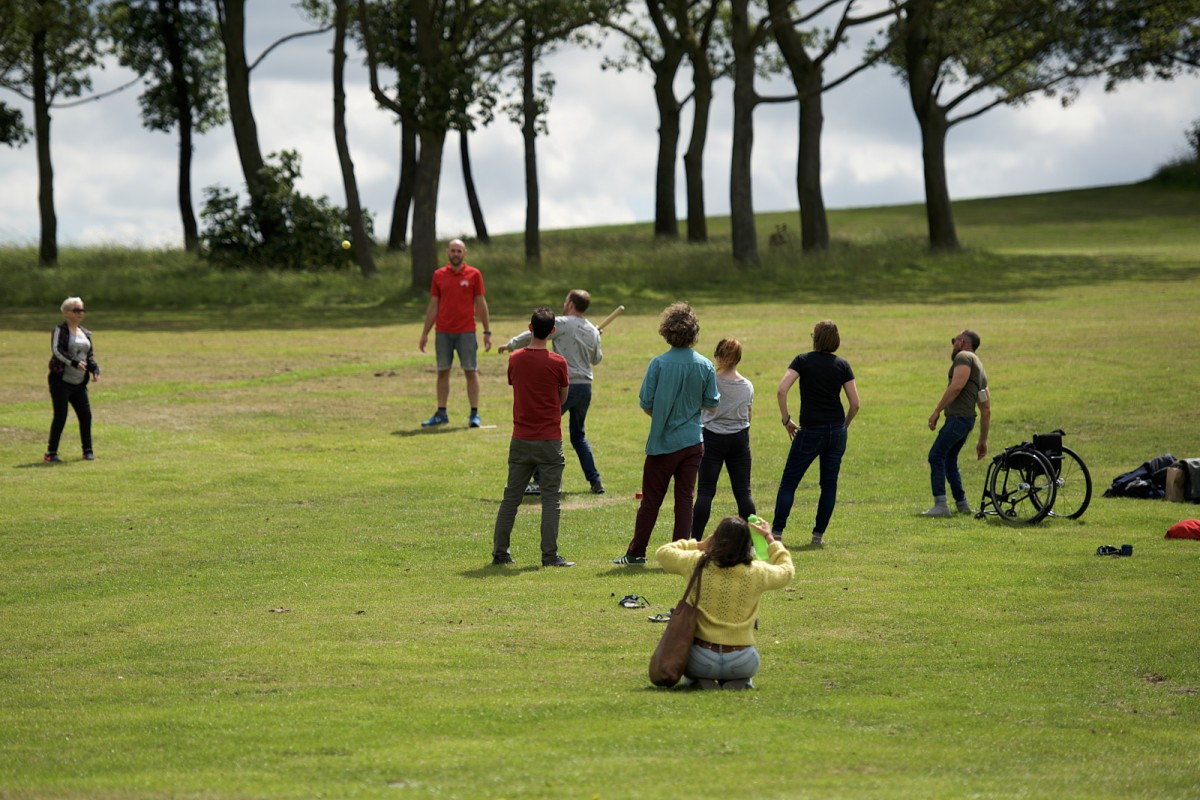
Freedom also features in the play sessions: these are for relaxation, for clearing one’s head and for team building in the glorious setting: the Wide Game, Rounders and (not quite play) T’ai Chi to start the second day.
Tribal & global
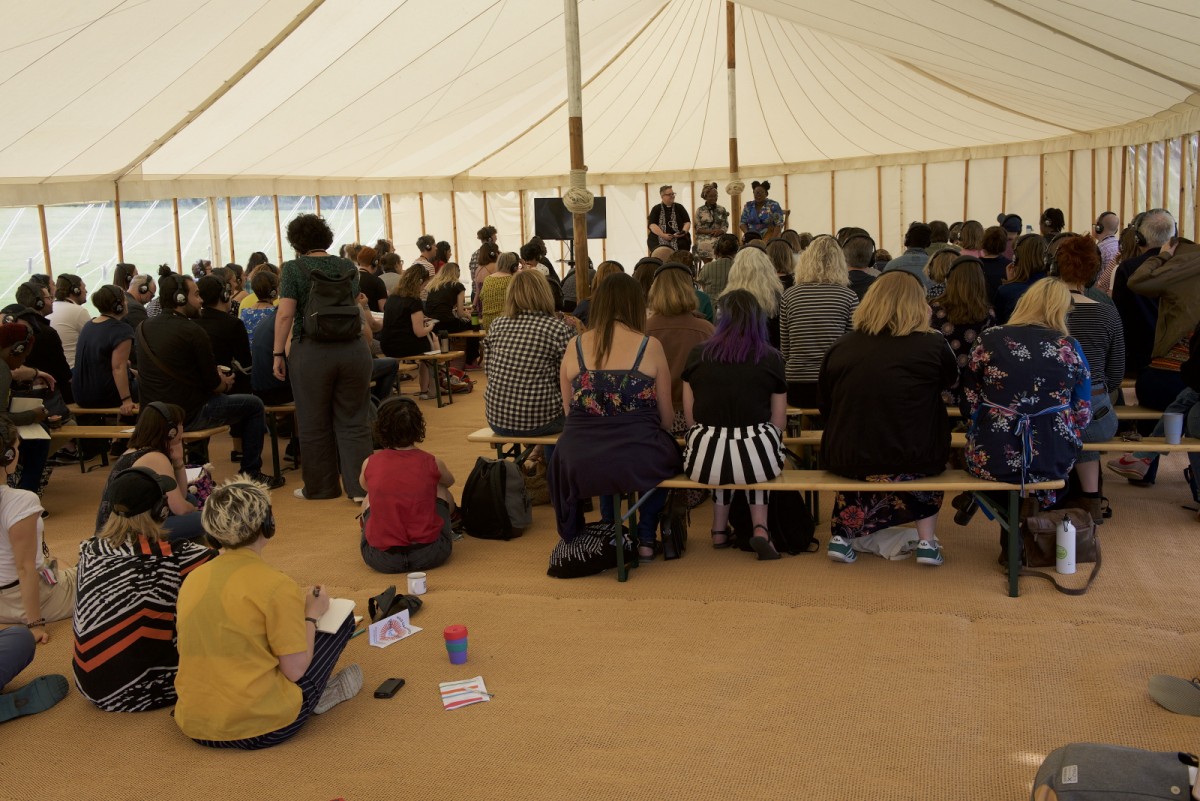
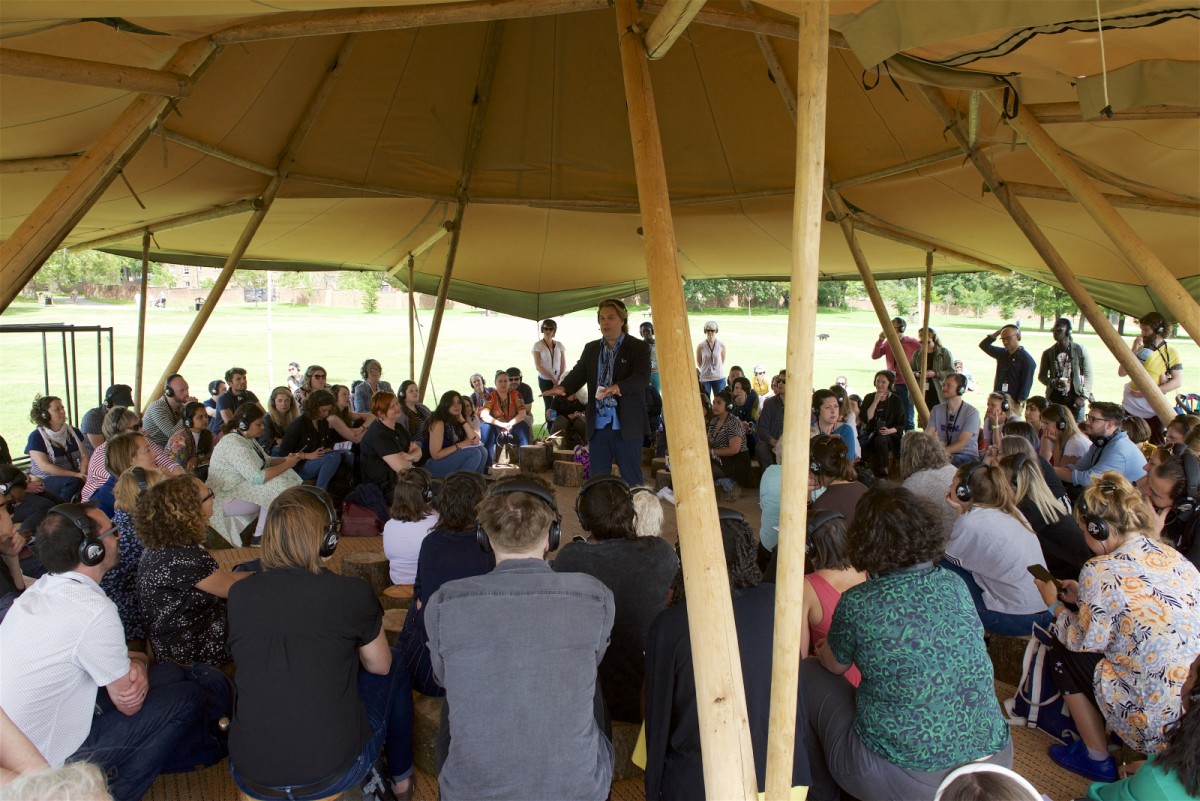
The conference fostered both tribal and global feelings. A sense of instant community developed quickly and while delegates talked to people they knew at first, lunchtime with its DIY BBQ, nine delegates per table, got people introducing themselves and opening up. The invited British Council delegates made a huge contribution to the global aspect of the conference. Their voices were heard in Q+As and in the two debates, and their articulate views on our sector were the most memorable contributions. They were like participant observers, offering some well-pitched anthropological detail on how we in the UK categorise, make and discuss art: we take it away from other countries, but then put it behind glass, so we can’t even touch it. We endlessly discuss definitions, categories, permissions – why don’t we just get on with it and make the art we want to make??
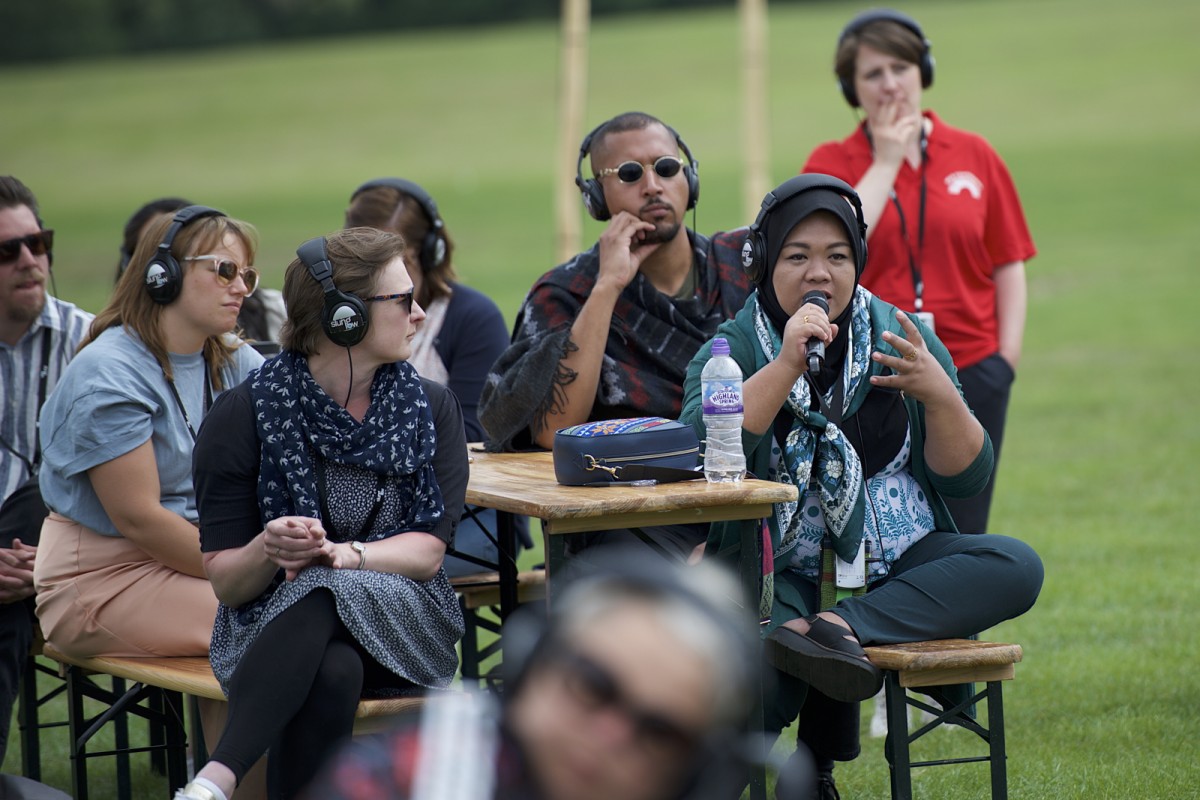
The ‘global’ is also fostered by the programming of sessions: a real range of speakers – teachers, tech specialists, charities, activists, consultants, fine artists and collectives, people of faith, academics, many trailblazers for inclusion and representation. A great sense of interdisciplinarity here! I have hardly ever felt further removed from the parochialism which can engulf us in times of uncertainty. Limitless ideas and buoyant optimism, juxtaposed with moments of realisation how far we still need to evolve.
Safe & daring
‘To get everyone home safely’ is always at the top of the Slung Low objectives, and WILD is no exception. The extent of planning, risk management and catering for eventualities is impressive, and significantly contributes to everyone feeling safe and cared for, their needs being met. The element of daring is created through the novelty of the outdoor setting and its unpredictability, the ritualistic elements (the fire!), smoke grenades, bursts of pyro, and provocative content in the cabaret (although never provocation for provocation’s sake!). There are some spontaneous decisions at the end of the Cabaret which show that WILD is not just based on rock-solid planning, but also relies on a team which can react to complex circumstances in the moment.
Analogue & digital
WILD is held outside, there is no WiFi, a DIY (or DIT – do it together!) BBQ, and delegates are asked to help with striking the site. The expectations ‘kind & useful’ made delegates take responsibility (collecting rubbish, helpfulness towards others) and draws attention of the work involved. Technical sophistication is brought by the sound operation, with each of the tents on its own broadcast channel and soundscape (‘Welcome to the Spiky Tent!’). Sound and light for the Cabaret (‘it’s a two-man job really’, Matt remarks afterwards, having done it alone) is operated flawlessly.
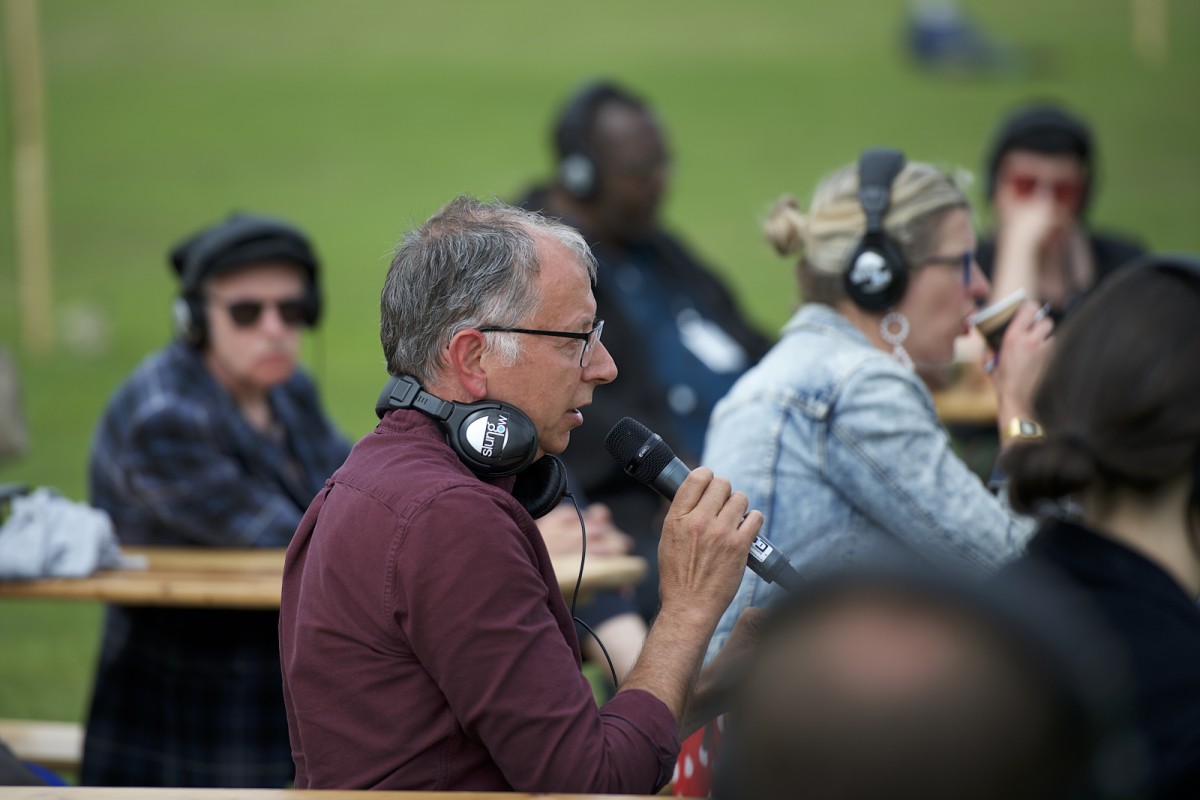
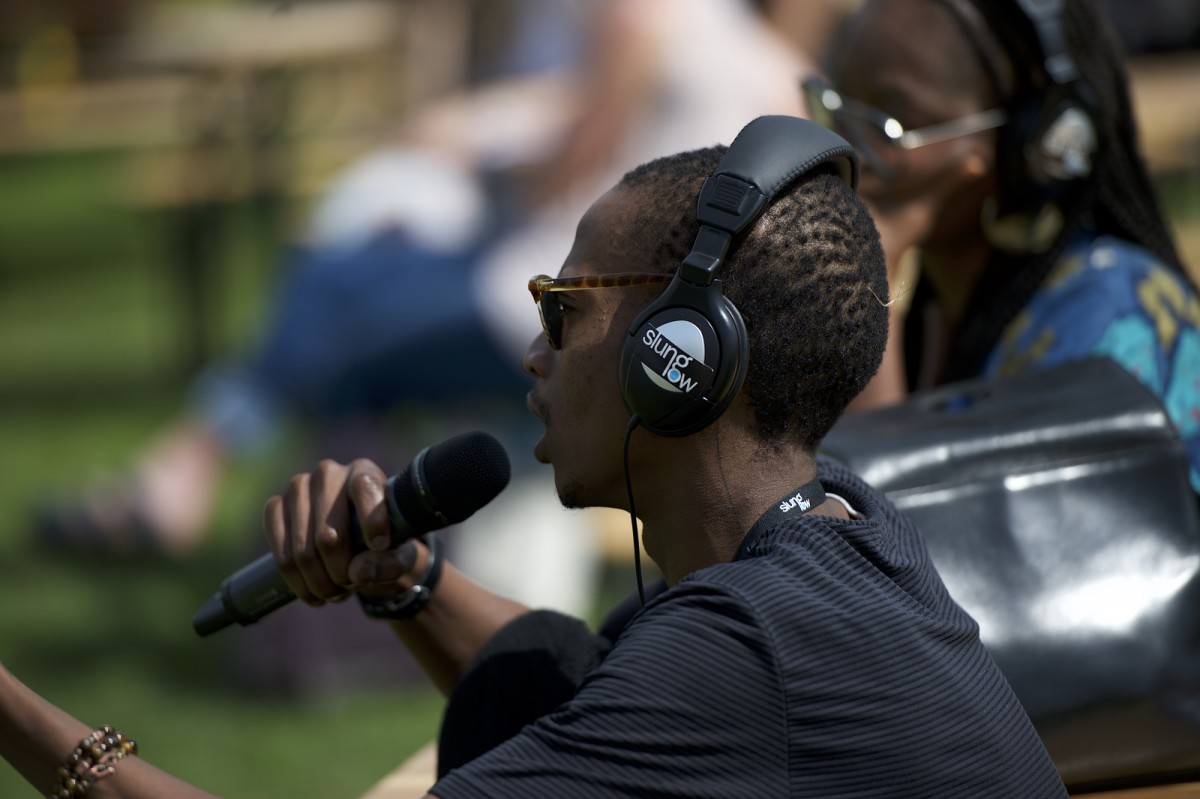
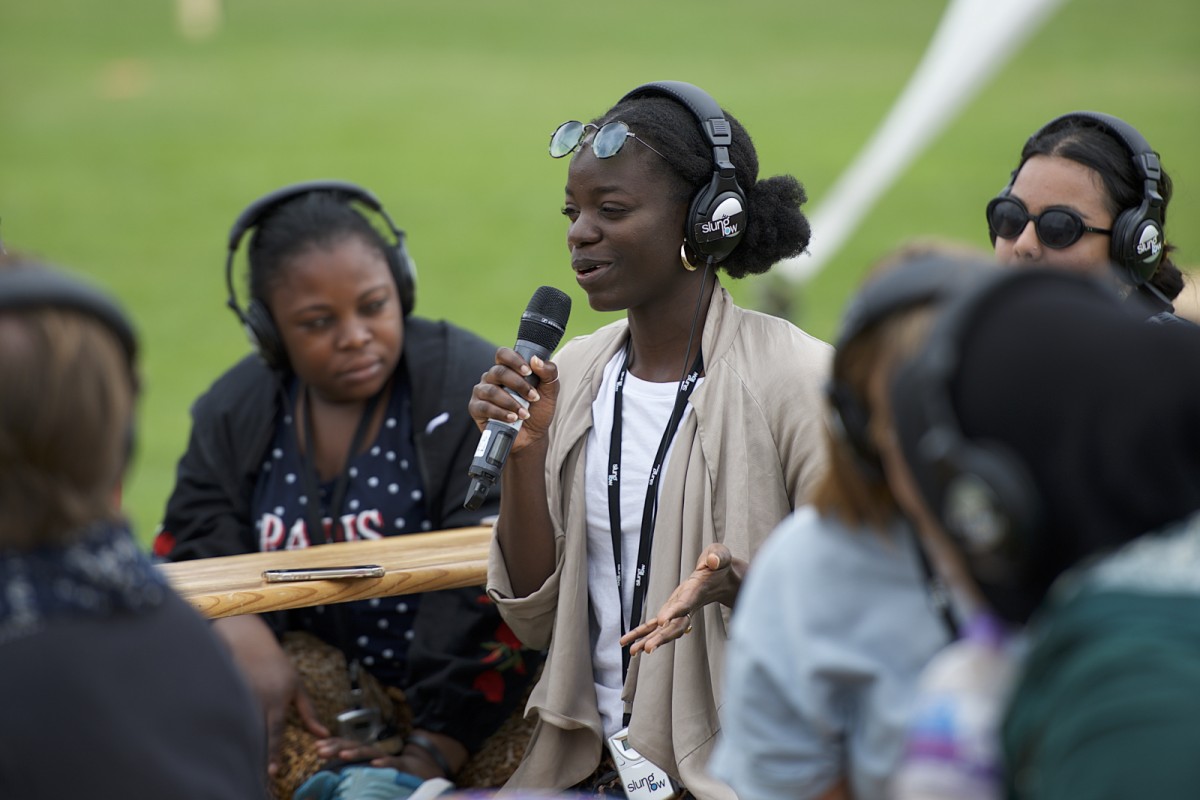
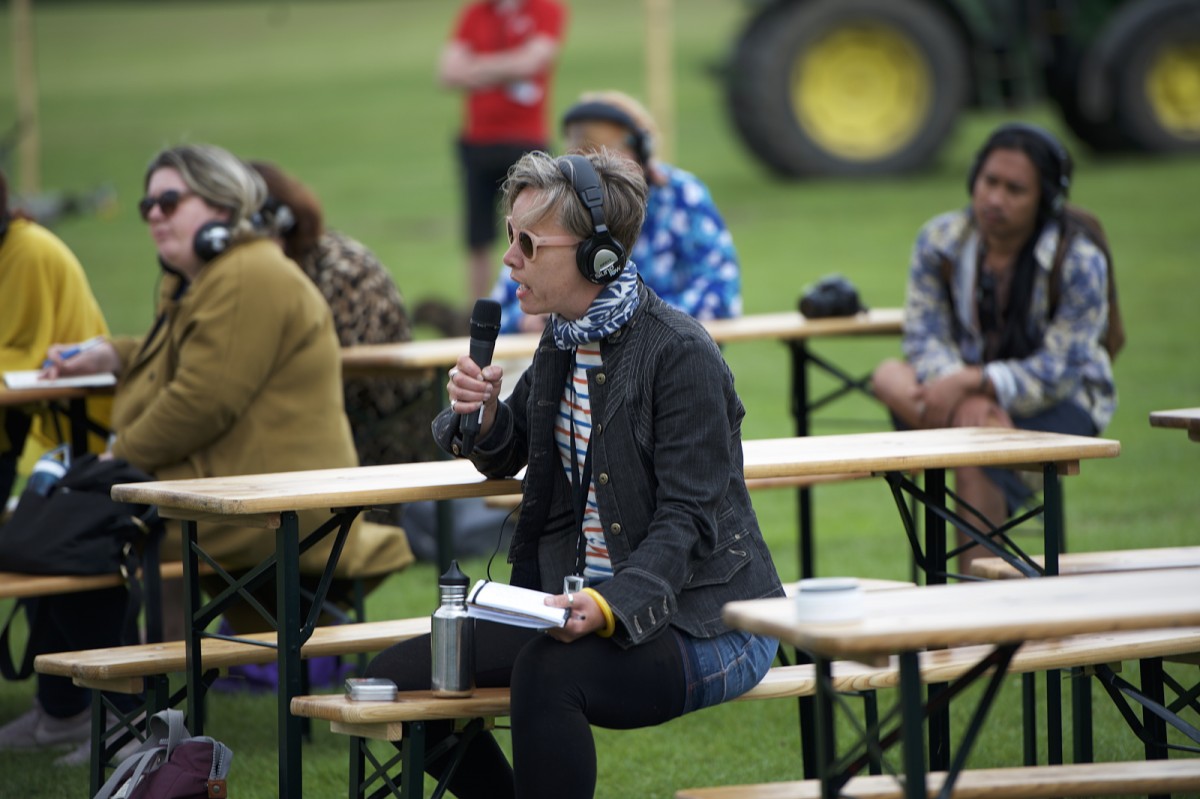
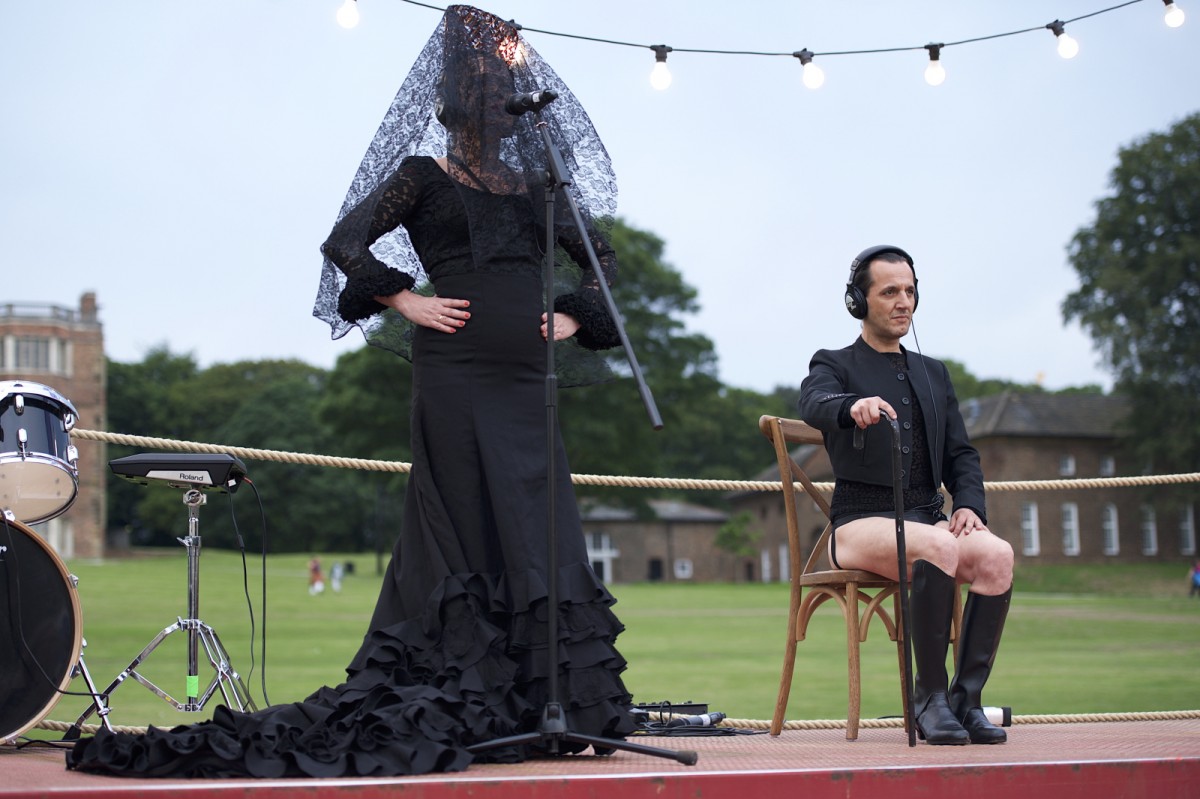
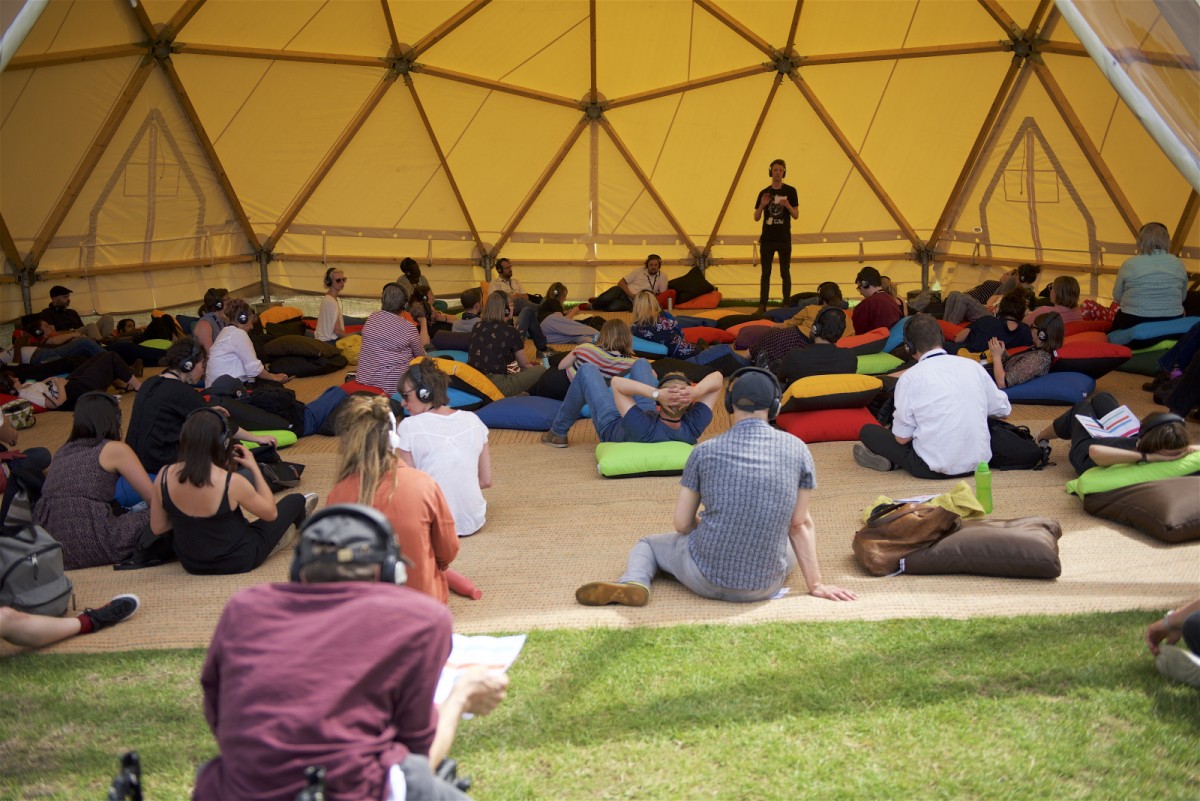
WILD is convened for people to be present, and to give their attention to live content, even though the sound is mediated through headphones. It is worth grappling with the slight feeling of disconnect delegates might have felt at first (mainly those who were new to Slung Low), as there are many advantages. Finding the right space in which to listen is one of them, and we see delegates wandering off around the site while listening, or lying on the grass with headphones. The headphones also offer intimacy: a presenter does not have to speak louder than their normal volume, the feed into our ears conveys that they’re speaking to us personally. This allows the presenters to relax while speaking to a large-ish audience and it has positive implications on their physical communication and body language. This also goes for respondents and debaters, who are passed the mic in the Q+As. The headphone operation means there is no noise pollution on site. It creates an entertaining aura of mystery for walkers and passers-by, as the busy site in near-silence probably resembles a cult, particularly during the Cabaret: fire, ritual, pyro and artistically relevant nakedness!

Both the sessions and the debates come across as democratic, not intimidating, and are skilfully chaired. The two debates are designed to give as many delegates as possible an opportunity to speak, with topics voted for by email. The Day 1 debate is more a series of informative statements, not grouped together easily under the topic ‘extremism’. Day 2 debate (arts and/in education) has a clearer remit and allows for many (sometimes connected) points to emerge. At first, it is very UK-centric, but is then opened up to global perspectives by the international delegates in a series of brilliant provocations, making us reflect back on how coded our world and its language can be. I would say that everyone came into contact with new angles and perspectives in this debate.
Generally speaking, the conference operates as an expansion, not as a confirmation of existing knowledge, and as a big encouragement to make expansion a fluid state, not to ever feel that the work is done, both as individuals and as organisations. What are the alternatives to the way our sector operates? How can we be more useful, more inclusive? How does it feel to be othered and excluded from discourses and decisions? How can we resist divisions brought about by a lack of funding? How can the arts be an ‘eco system’ of different size organisations? WILD encourages us to think about what ‘community’ means above all, through the ways in which the site is designed, the conference is programmed and structured and particularly through the diversity of content, perspectives and narratives. It teaches us that inclusion is a dynamic process, where assumptions, acquired knowledge and ways in which we act on them require constant updating.